fiddlehead definition


fid·dle·head [ fídd'l hèd ] (plural fid·dle·heads) noun
Definition: edible fern shoot: the coiled frond of a young fern, often cooked and eaten as a delicacy

Thursday, October 17, 2013

Goldenrod

I walked to find the meadow, to sink down into the grass, soak in the sun, and feel childhood pleasure. The grass was lush and brilliant green on this early autumn afternoon. The sky was a cloudless robin's egg blue, the type odes and songs are written about. Breaking up these jewel tones was an explosion of gold plumes softly swaying in the gentle breeze. Goldenrod, one of summer's last flowers.
 
I watched the bees alight on the blossoms, drinking the already honey-scented nectar. Animals and insects, attracted by the bright, showy plumes, drink the abundant nectar and collect the heavy pollen. Heavy pollen. Hear that? Goldenrod is not wind pollinated and even if it was, its pollen is too heavy and sticky. Poor goldenrod is always blamed for early fall allergy season but the real culprit is the plant that shares its bloom time with goldenrod: ragweed. Ragweed has the small greenish yellow flower heads and produces giant amounts of necessary tiny pollen to float in the wind. Fields ablaze with goldenrod do signal the coming of colder temperatures, but are not to blame for your sneezing.
 
Billy goat weed, Feverfew, and Goldenrod- a ruderal bouquet 
To most goldenrod is considered a weed. Well, maybe not in Kentucky where it is the state flower or Delaware where it is the state herb (who knew there were state herbs?). The perennial with single woody, hairy stems grow from 3 to 7 feet tall. Its narrow, dark leaves alternate between jagged and smooth edges. It multiplies by sending root runners which take root and start to grow new plants. Strawberries do this too. This is why there are usually clumps of goldenrod together. The bright flowers bloom in late summer to early fall. Because it can crossbreed with other plants, there are more than 100 species of goldenrod. Goldenrod is noticeable both because of its fiery bloom and because it is a ruderal ( from Latin rūdus meaning rubble)species, meaning it easily grows in poor soil or disturbed soil. These are the first to colonize after a forest fire or take over an abandoned lot.
 
Fun History of goldenrod:
  • Thomas Edison experimented with goldenrod when he tried to find a naturally occurring substitute for rubber at the request of Henry Ford and Harvey Firestone. The rubber tree, which does not grow in the United States, provided the natural rubber used for tires up to that time and it was becoming increasingly expensive. Edison managed to get 12% rubber out of the plants. Henry Ford even made a Model T with tires made of goldenrod rubber and claimed the tires strong and long lasting. Eventually synthetic rubber was discovered.
  • Goldenrod was one of the plants used for tea after English tea was boycotted following the Boston Tea Party (1773). They called it "Liberty tea." It was also used after the Civil War when English tea was difficult to obtain.

The vibrant yellow flowers have long been a source of dye. All parts of the plant are edible and all varietals are safe. Goldenrod is of the genus Solidago which means "to strengthen" or "to make whole." Beyond tea, it has long been used medicinally for respiratory and urinary tract issues and to help ease pain. Tinctures and tonics have also been made to utilize goldenrod's antibacterial properties both internally and externally. Use the flowers for garnish. Cook leaves much like spinach or use in soups and stews. Use both the flowers and leaves to make a sweet, delicate tea with bright herbal hints and a fennel-like scent. It tastes a bit like sweet hay. The healing and calming qualities of this tisane can also ease emotional pain.

Fresh Leaf  Goldenrod Tea:

 Chop leaves and flowers
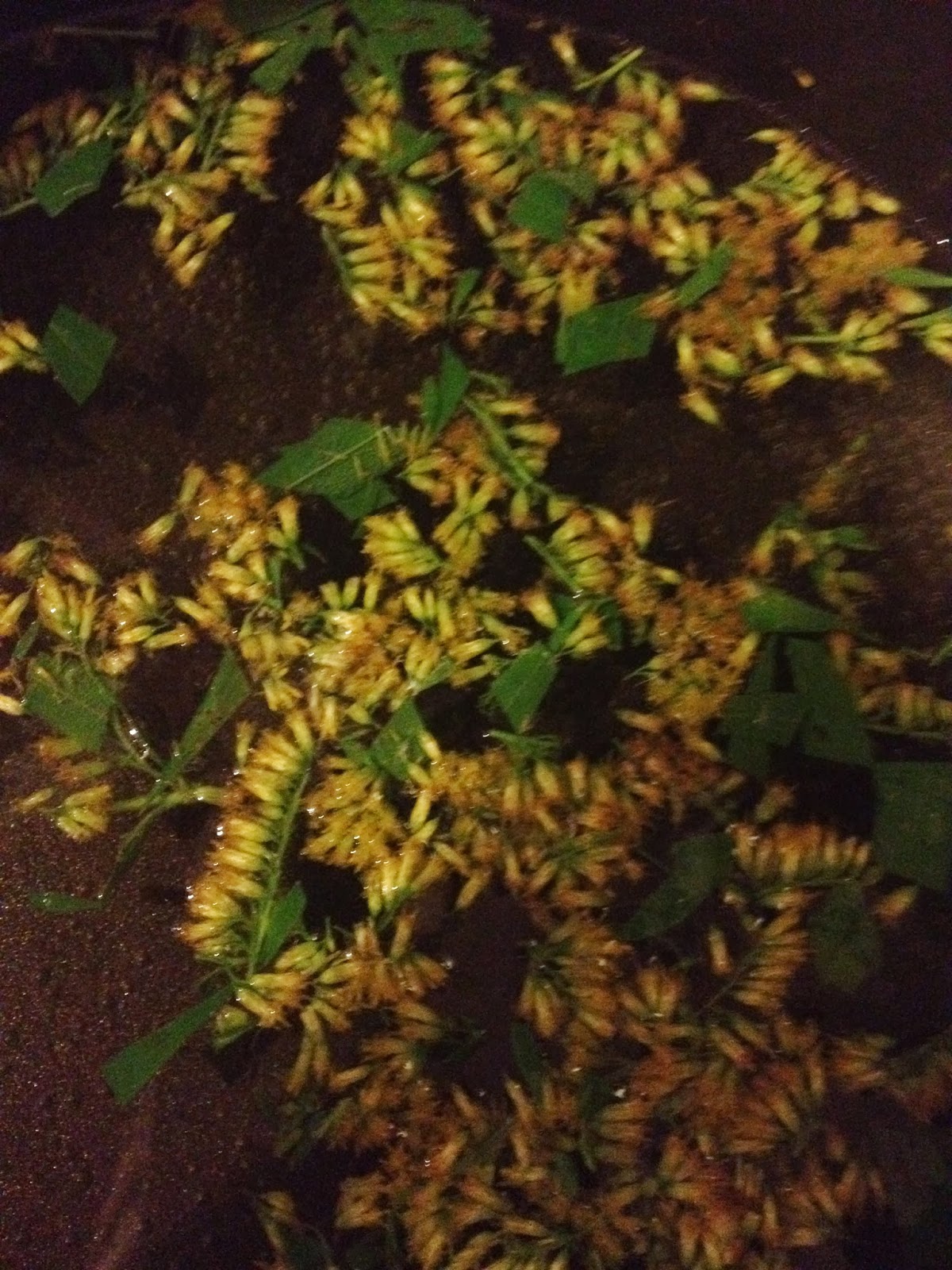
 
Steep, covered @T in 1 cup of boiling water (or 1T dry)
for 20-30 minutes

Enjoy while Sting sings Fields of Gold.
 

Thursday, September 5, 2013

How to Spend a Perfect Weekend in Asheville: The Asheville Wine and Food Festival Day 1


 Destination Asheville for a weekend of local food and mountain vistas.
In a mere 3 hours and 25 minutes my partner in crime and I arrived at The Renaissance in downtown Asheville. The drive was easy and beautiful with the mountains looming in the distance. We dropped off our belongings and hit the streets for a late lunch. The location of the Renaissance is perfect for the downtown restaurant, music, and art scene.

First stop: Curate
We sipped on a Garnacha blanco and feasted on jamón serrano fermin, jamón iberico fermin, jamón Ibérico de bellota, and croquetas de pollo.

 Second afternoon stop: French Broad Chocolate Lounge
We ooed and ahhed over all hand dipped French Broad confections (one of only a handful in the world to make truffles from bean to bar chocolate) and decided on a (giant) slice of flourless chocolate truffle torte. Then we made noises of extreme pleasure akin to an herbal shampoo commercial. It was that good.
Junction's The Local Sage cocktail- beautiful, layered, sage-y, delicious.
 
 Our event for the evening: Elixer- a craft cocktail competition of The Asheville Wine and Food Festival with 12 mixologists competing for the prize. The difficult part for these cocktail makers was the necessary inclusion of Angry Orchard hard cider in their glass. The event was lively and convivial. In addition to the cocktails in the competition, there were many local distilleries to sample. I had my first taste of Defiant Whiskey from Blue Ridge Distillery, a trend that colored my weekend.

View from judge Mackensy Lunsford's seat

Autumn in Asheville from OneFiftyOne a crowd favorite including Shrub and Co. Tart Apple Shrub and Troy and Sons Blonde Whiskey. Tasted like fall. I finished my glass and my friend Monica's.

Winner Kyle Beach from MG Road. His 100 Proof Heartache was a smoky, savory concoction worthy of praise with mescal, apple brandy, ginger, chili, lime... On Friday night I visited MG Road and asked him to make a few cocktails and talked about inspiration. He is Paul Calvert-esque behind the bar- charming, inspired, and clever with his ingredients. He asked my style and I explained in literary terms. What I received in return was exactly the flavor profile I was seeking.

Final stop of the night: The Imperial Life
A favorite of mine and on this night chock full of many of the bartenders who competed in Elixer. I was able to sit with good friends and eat Jacob Sessoms locally inspired food. We sampled much of the small plate menu full of all things raw, cured, and aged, like house-made charcuterie, artisan cheeses, raw oysters, sashimi, tartars. Cynthia Turner was a genius and a pleasure behind the bar. Another place where it is good to say "make me something with____ please." We strolled home under a giant moon satiated and happy.


Thursday, August 22, 2013

Great New Foraging Book-- Wild Edibles by Sergei Boutenko


I read and purchase a lot of foraging/plant identification books and I definitely have a favorite. It is so old and dog-eared from being read and revisited over the years. I even purchase reissues for new little tidbits of edibles but cling to my old copy. It has always been my favorite, my go-to for identification and information. That is until this week when I received Wild Edibles by Sergei Boutenko. This book is clear, concise, and thoughtfully written for both novice foragers and those who know a thing or two.
My favorite page

This practical guide is chock full of photographs that clearly identify edibles with multiple shots for distinction. I have yet to encounter a book that does this so well. If words (like leaf shapes) are unfamiliar, the reader can flip to the back of the book to find drawings of common foraging words and diagrams. Included along with identification are uses, nutritional information (very detailed), helpful tips, identification tricks, cautionary advise about look alikes, and flavor. He also includes conservation and gathering etiquette.

The story of Sergei's lifelong adventure with wild edibles makes a great read as well. His enthusiasm for foraging and eating healthfully while respecting the earth comes through on every page. He ends the book with 67 recipes that are inventive with flavors and textures and allow for flexibility of wild ingredients.

Not a book reader, or want something hand to always have with you? Sergei created an app with identification techniques, photos, and nutritional information. Check it out here.

Wednesday, July 24, 2013

Attack of the Killer Tomato Festival

My favorite festival, Attack of the Killer Tomato, celebrated its 5th year July 21 with all the pageantry and aplomb that a beloved gathering of chefs, mixologists, farmers, and tomato enthusiasts could possibly muster. All for the beloved tomato and to help Georgia Organics advocate for our local farmers.
 
44 Chefs representing 38 restaurants paired with 27 local farms and their bounty of summertime tomatoes, many of them those ripe heirloom beauties that have us scoffing at grocery store imposters. It is astounding to me how each year there are so many new and interesting creations from our bevy of talented Atlanta chefs all relying on the same ingredient for inspiration.
Jeff Jackson of Rosebud
Jeff''s "Paint it Red"
Add to the chefs 17 mixologists grouped with both local farms for tomatoes and one of the following: Crop Harvest Earth Vodka, Farmers Botanical Gin, Ole Smoky Tennessee Moonshine, Troy and Sons Moonshine, or Paqui Tequila. Again, the mixtures never seem the same and are the biggest treat of the usually very steamy Sunday fest.

People's choice winner Local Three with Caprese Ice Cream with basil, ricotta, and tomato flavors.
 
 
 My favorite bite, tomato umami bomb, from Tyler Williams of Woodfire Grill. So good I couldn't hold the camera steady.
My favorite cocktail from Andy Minchow of the much anticipated Ration and Dram. Confession time; I had three. The Tajin seasoning on top was so unexpected and perfect.
Hector Santiago's slider. He is now with Abattoir and I cannot wait to see what he brings to the table. 

 Patric Bell-Good's (Barrelhouse) Bloody Mary Gazpacho with pickled corn and okra utilizing Troy and Son's white whiskey. Looking forward to more Troy and Sons at Asheville Wine and Food Festival in a few weeks.

Arianne Fielder of Seven Lamps and her Nest Egg: gin, strawberry-tomato granite, rosemary, and a green chartreuse "egg" floater.
 
Kara Hidinger with Abattoir's Gandy Dancer (loved the tomato foam). Cannot wait for Staplehouse to open. Kara, Ryan Smith, and Ryan & Jen Hidinger is a dream team of goodness in so many ways.

 
Did I mention the dunk tank? Watching Ron Eyester get repeatedly dunked was a laugh riot. He was such a good sport.
Until next year...


Speaking of tomatoes, The Red Gold Summertime Grillin' Party is now live on their Facebook page. There will be a grand prize give away of a Big Green Egg. To enter: click Here.  I use their lime and cilantro tomatoes to make a quick and delish chicken burger.

Caribbean Chicken Burger
 
1 lb. ground chicken
1 14.5 oz can of Red Gold Lime Juice & Cilantro
Salt & Pepper
 
Mix ground chicken and Red Gold tomatoes (drained). Form into patties. Salt and pepper. Grill
 
Serve on a toasted H& F bun or lettuce. Add guacamole or avocado or even a roasted pineapple slice. Top with Emily G's chutney.
 

Friday, July 19, 2013

Asheville Wine and Food Festival

View from Biltmore Estate back porch
Travelers hungry for an authentic food experience need look no further than the Foodtopia nestled between the Blue Ridge and Smokey Mountains. Asheville embodies a social and environmental consciousness that permeates throughout the community. The significance of supporting and appreciating where and who food comes from is everyday life in this region where traditional ways of cooking, preserving, and curing never went the way of convenience. The words "farm to table" are not necessary here. Farm to table just is in Asheville.

In addition to a great diversity of local and regional ingredients grown and raised in fertile soil, Asheville is home to a bevy of talented chefs, distillers, brewers, farmers, and artisans from around the world who collaborate with purpose on maintaining the viability of the local food system. With its bourgeoning food scene, Asheville is both a food destination and mountain refuge. Raft in the rivers, hike through Pisgah National Forest, take a walk through George Vanderbilt's Biltmore, discover the 100 year old Omni Grove Park Inn, and also check out the tailgate markets, a sustainable chocolate factory, hundreds of independent restaurants, and scores of microbreweries fed by pure mountain water.
Mark the weekend of August 22-24 on your calendar for a food driven fete showcasing the connectedness of farm, table, and community in beautiful Western North Carolina. In its 5th year, The Asheville Wine and Food Festival is bigger and better in the US Cellular Center. Presented by EDISON at The Grove Park Inn, here is what you can expect:


Elixer

This mixologist competition highlighting many craft spirits from the region (Troy and Sons Moonshine, Cardinal Gin, Carriage House Apple Brandy) includes samples of tipples and hors d’oeuvres on Thursday 8/22.
Jael Rattigan of French Broad Chocolates

Sweet

Sweet on Friday evening will be a sampling of the tastes of local bakers, chocolatiers, pâtissiers, wine vendors, and distillers who will line the corridors of the historic Grove Arcade in downtown. Expect to hear wonderful phrases like "...with sorghum molasses from Doubletree Farm" or "infused with Mountain Farm's lavender."

Jacob Sessoms of Table Restaurant and The Imperial Life

WNC Chef's Challenge

The region's celebrated chefs compete Iron Chef style with the finale happening during the Grand Tasting on Saturday 8/24. Proceeds benefit Eliada, helping children and families of Western North Carolina. You can follow the food fight that has been going on since February here.


Grand Tasting

This is the main event including, cooking demos, more than 300 wines, dishes from local restaurants, craft beer & spirits, and sample of artisanal products from the region. Meet the farmers, chefs, restaurateurs, brewers, distillers, and producers while you mingle. This bright finale, culminating the three day culinary gathering, will integrate the members of the Asheville landscape and show the long standing relationships between purveyors and community. And then you will be back to taste Asheville again and again.


General Admission
Saturday, August 24, 2013
1-5 p.m. | $55
U.S. Cellular Center | 87 Haywood St., Asheville

VIP
Saturday, August 24, 2013
12-5 p.m. | $75
U.S. Cellular Center | 87 Haywood St., Asheville

Tickets can be purchased here.

Monday, July 8, 2013

Yum Bunz is Open!

Atlanta has been waiting for the opening of Yum Bunz with eager anticipation. Today is the day to experience the collaboration between Miso Izakaya's Guy Wong and Real Chow Baby's Mike Blum with Executive chef Chris Lee. Plenty of parking awaits in the deck next to the spot. Fresh, quality ingredients served up fast and friendly.
 
The space is bright, clean, and spacious with large booths, tables, and communal picnic-like tables down the center. Hand painted pop art murals are vibrant and stunning to inspect as you wait for your order to be brought to your seat. I can't help but notice the pops of red throughout the space and feel its symbolic joyousness it is supposed to impart in Chinese tradition. This place is cheerful.
 
Griddled pork and chive dumplings.
There is also a vegetarian option.
 
 
The bao--perfect palm-of-your-hand-sized yeast dough amply filled yet less than 180 calories each. They make for a perfect portable meal. A box of six is a mere $8.69. You won't be confused by which bao is which with thoughtful paper labels on the bottom of each.
 
Noodle Bowls: choose a base (white or brown rice, quinoa, rice or gluten free egg noodles), choose a protein (chicken, beef, tofu), & choose a sauce (teriyaki, red curry, green curry, pad Thai).


Yum Bunz on Urbanspoon

Thursday, May 30, 2013

Purslane


“We know, mom, you can eat it” my children say as I pause next to a sprawling plant on the edge of the sidewalk. It’s what we do. We hike or walk and I point out leaves and flowers while they humor me. I did the same on camping trip with my mom. Secretly I loved it, all the while rolling my eyes as my children do today.
The plant I was pointing out to them was purslane, an ingredient eaten around the world and throughout history, yet shunned on dinner plates in the United States. I try to understand why just as I read Henry David Thoreau try to discern in Walden: “I have made a satisfactory dinner of a dish of purslane which I gathered and boiled. Yet, men have come to such a pass that they starve, not for want of necessities, but for want of luxuries.” Delicious and healthful abundance is around us.
We finished our walk and decided to take a trip to the farmers market. I sneakily snuck a green bunch into my basket. I never mentioned that the salad they ate for dinner contained purslane until we finished and they complimented the tanginess of the greens. “So we foraged, mom?” Not exactly, but it’s a step.

Fossil evidence puts purslane in the Americas before Columbus. In Mexico it is called verdolaga and is used in soups and salads. In China it is known as carti-choy and used in stir-fry dishes. The French call it pourpier.  Italians call it portulaca, and many Middle Easterners consume it mainly as a potherb. It is used in soups and curries in South India.  

Purslane is a super food yet its status is relegated to a position as a weed to be eliminated from our pristine American landscapes. Tips fill the internet and gardening books on ways to kill or prevent its encroachment into one’s lawn. If you look on USDA info about pursane, it is described as a “noxious weed.” Remember the famous quote from Emerson:   "What is a weed?" A plant whose virtues have not yet been discovered." Discover away.

Purslane is a succulent, meaning it has water-storing leaves or stems. It’s thick, round leaves are almost teardrop shaped. Its red, recumbent stalks form a sprawling matt as it grows everywhere- in crack, sidewalks, and abandoned pieces of earth.  The entire purslane plant is edible and can be eaten fresh, cooked, canned, pickled, steamed, juiced, or dried.

I love the flavor, somewhat tart, citrusy, tangy, and lemon-like.  But the real beauty of purslane (besides that it grows everywhere) comes from its health benefits. It is high in antioxidants, low in calories, and rich in fiber. Its iron content is comparable to spinach. It is rich in vitamins A, C, and E. One cup equal 450 mg (the minimum recommended daily allowance). One cup also gives 2000 mgs of calcium and 8000 of potassium. It is the highest in Omega 3 fatty acid of any plant, more so than some fish even. This makes purslane a great choice for vegans.

Ideas for purslane:
Crisp salad: I chop the leaves, mix with arugula, and toss with lemon juice, fresh grated parmesan, and cracked pepper.

Purslane and potato salad: Take a large bunch (roots and all), wash and dry. Brush with olive oil and place on grill until stems are limp. Tear up leaves and mix with red potatoes that have been boiled for about 10 minutes and quartered. Add olives, feta, salt & pepper and a yogurt dressing. Cucumbers and radishes would be great too.
Pickled purslane: Wash. Pull leaves from the stems. Pack leaves in a quart jar. Add a few peeled garlic cloves and a handful of peppercorns. Cover in apple cider vinegar. Place lid and ring on. Store in refrigerator for a few weeks before using.  Mmm deviled eggs with pickled purslane relish.

*foraging note: spurge is a poisonous plant similar to and growing near purslane. Its stems are not as thick as purslane. Its leaves grow in pairs across from each other on the stem. Easiest way to distinguish is a white, milkish sap that oozes when the stem is broken.